From Barcode to Full Traceability: Building the Connected Factory
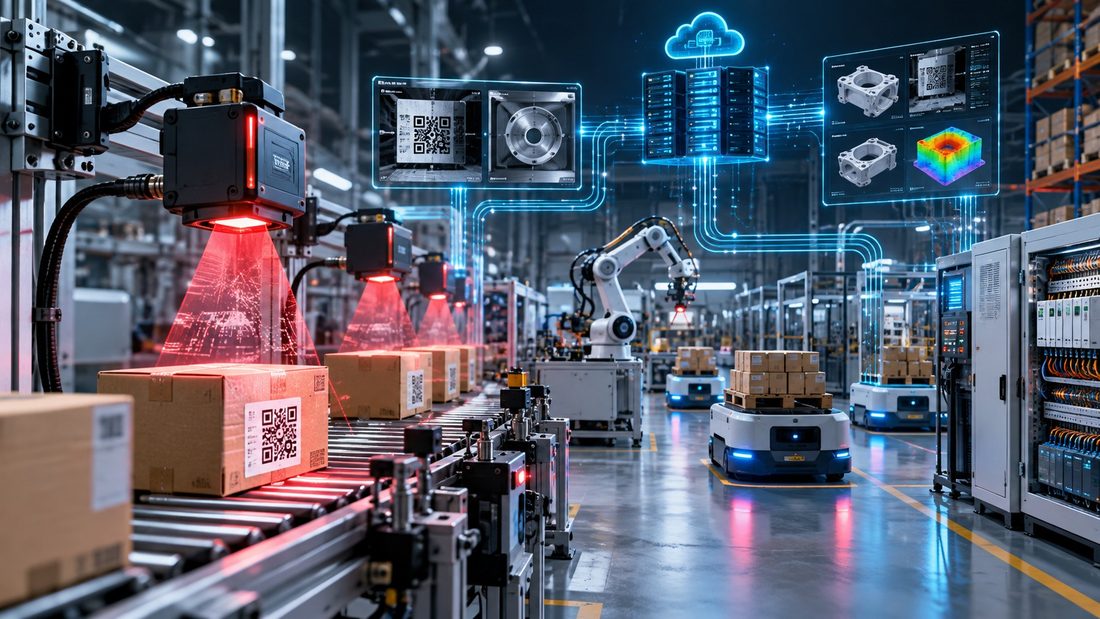
Every barcode, QR, and DataMatrix on your line is a promise: that this unit can be traced — back to its batch, forward to its customer, and sideways to every process it passed through. Reading the code reliably is step one. Turning those reads into a connected system is where the value compounds.
Read it once, read it everywhere
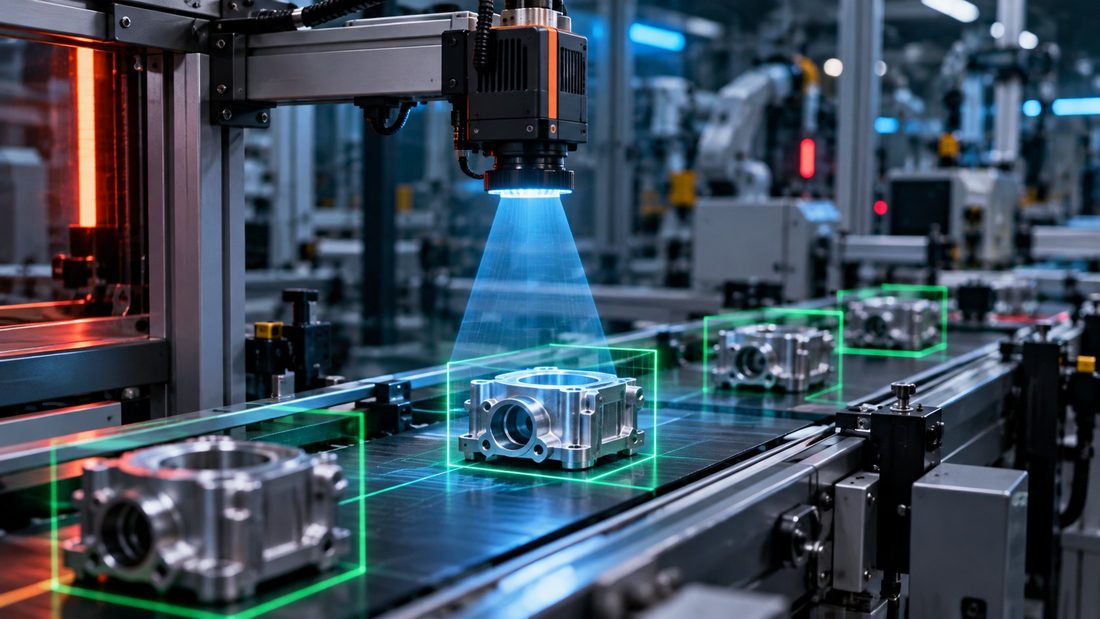
Industrial code readers now handle what handheld scanners cannot: small codes in a large field of view, low-contrast laser marks, reflective metal, codes in motion. Reading hundreds of codes in a single image — an entire tray or pallet at once — removes the manual scan step that quietly limits throughput. Combined with OCR, the reader verifies printed text and codes together, so a mismatch is caught before it ships.
Measure while you move
Dynamic weighing and dimensioning (DWS) captures weight, size, and code in one pass as a parcel crosses the belt. That single station feeds billing, load planning, and inventory at once — no separate measuring step, no transcription error.
Traceability is not a database project bolted on at the end. It is a habit the line acquires when every station reads, verifies, and reports by default.
Let the material move itself
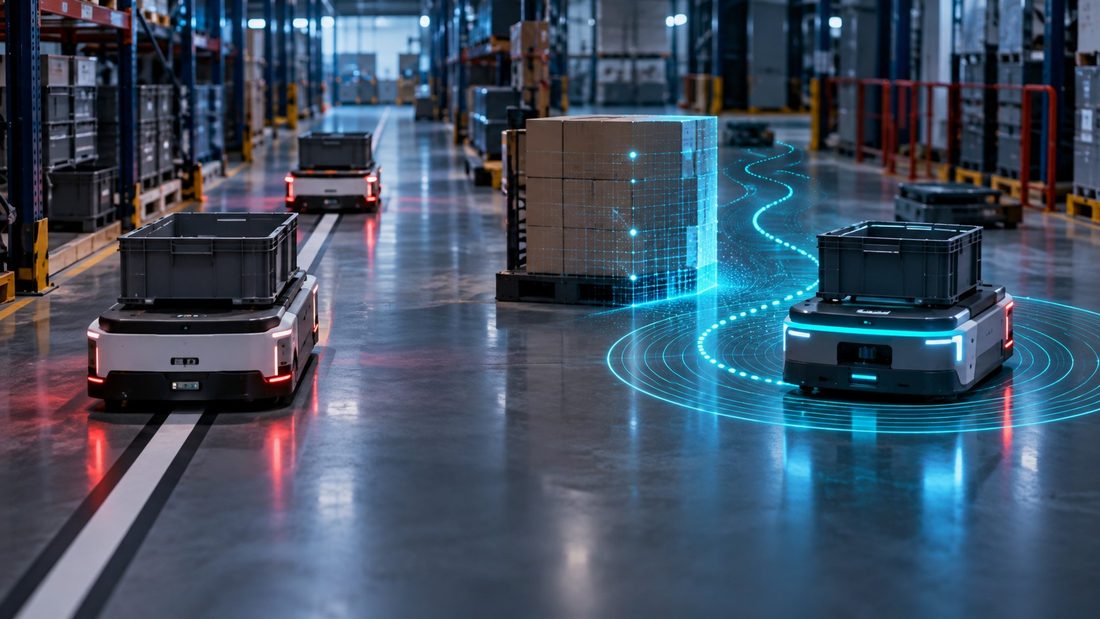
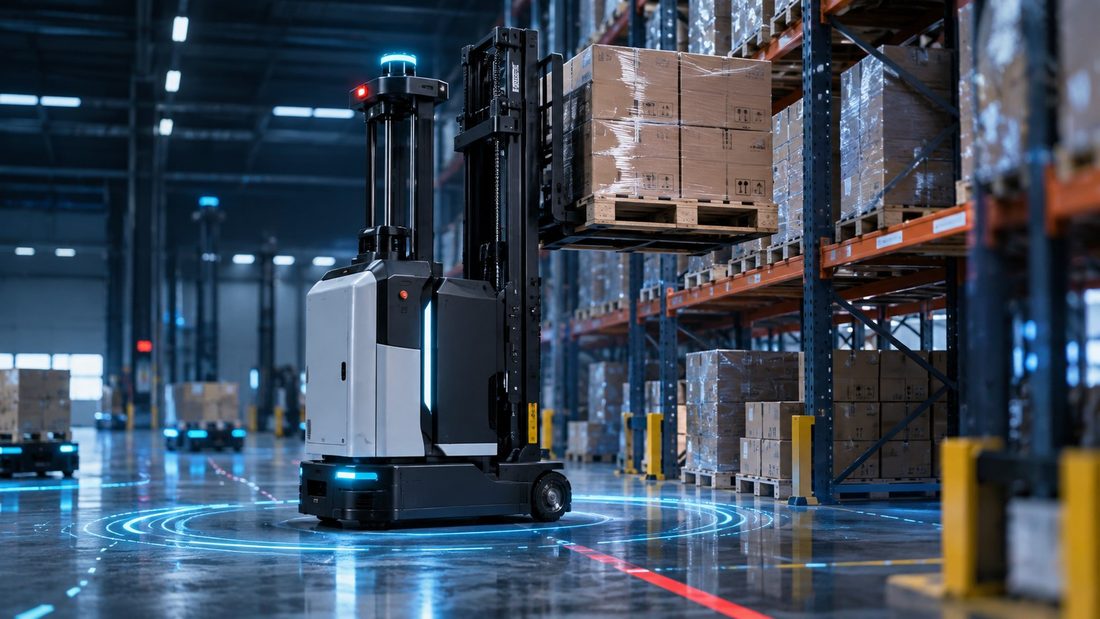
Autonomous mobile robots (AMRs) close the loop. Guided by vision and coordinated by fleet software, they move material between stations on a just-in-time basis — pulling from a virtual “supermarket” exactly when a cell needs it. Each move is logged, so the physical flow of goods and the digital record stay in lockstep.
Put together, code reading, DWS, and AMRs turn a factory from a set of islands into a system that knows where everything is — and can prove it. That is the connected factory we help our clients build, one reliable read at a time.