OCR & OCV: Membaca dan Memverifikasi Teks Cetak pada Kecepatan Lini
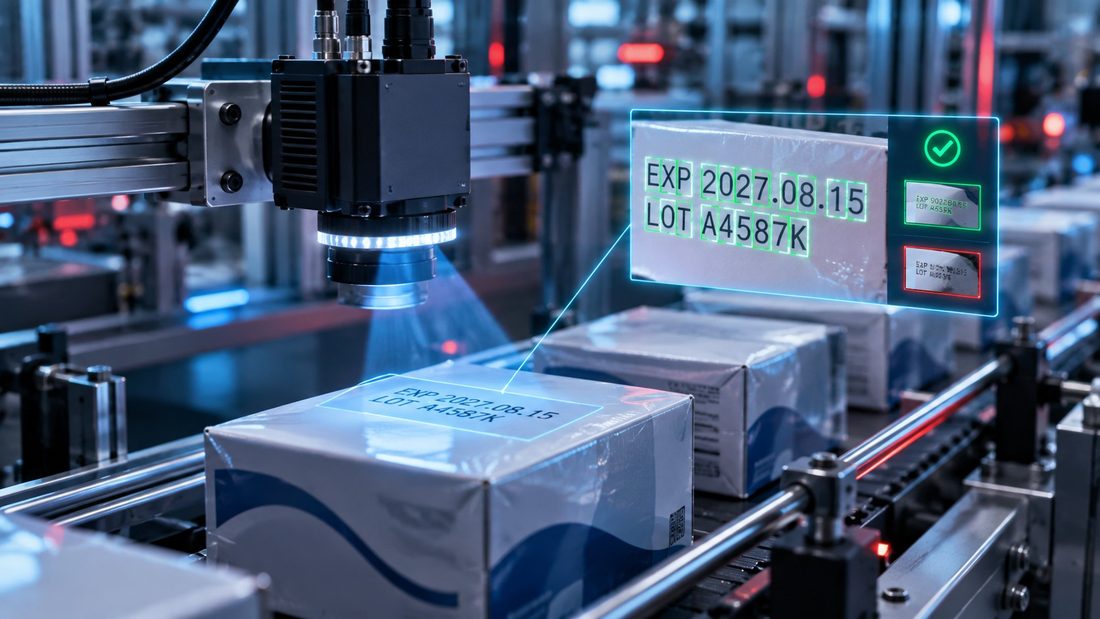
A printed expiry date, batch number, or lot code is only useful if it is both readable and correct. Two related technologies handle those two jobs: OCR reads the characters, and OCV verifies they match what they should be.
OCR: turning print into text
Optical Character Recognition converts printed or marked characters into machine-readable text — even on curved surfaces, under inkjet interference, or against busy backgrounds. Modern deep-learning OCR reads fonts and dot-matrix prints that stumped older template tools.
OCV: verifying it is right
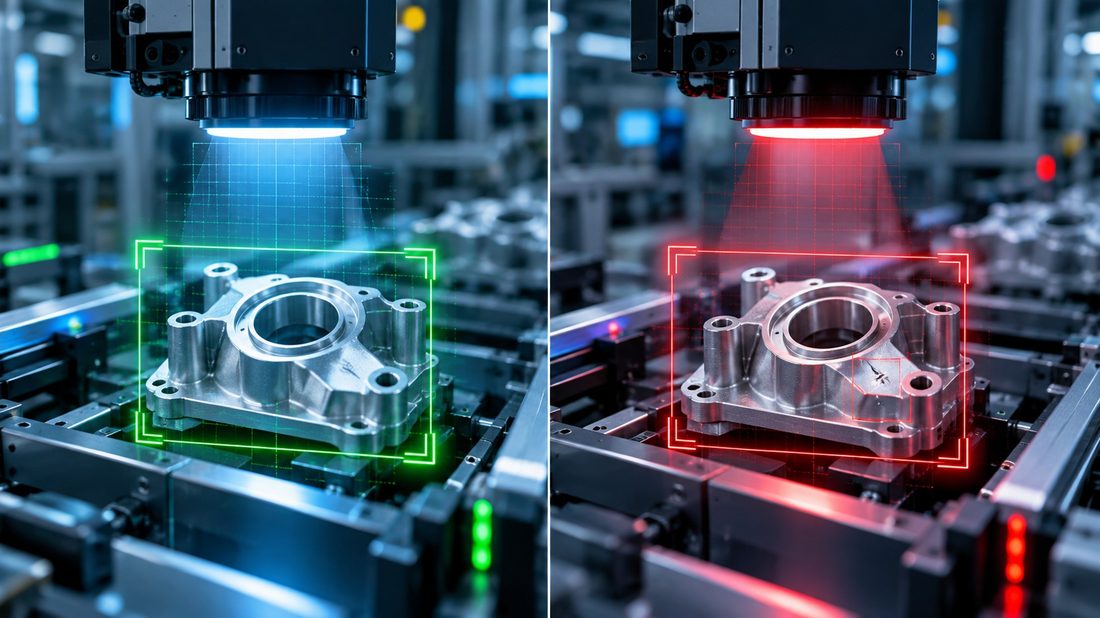
Optical Character Verification goes further: it checks that the printed content is present, legible, and matches the expected value for that unit — flagging missing, doubled, smeared, or wrong prints before they leave the line.
Reading the wrong date perfectly is still a recall. Verification is what turns a reader into a safeguard.
Where it pays back
In pharmaceutical, food, and cosmetics lines, a mislabeled unit is not a cosmetic problem — it is a compliance and safety risk. GSO integrates OCR/OCV with code reading on HIKROBOT and partner devices, so text and codes are verified together, at full line speed, with OK/NG evidence images to prove every decision.